Realistic Mixed Reality
Prerequisites for eventual, alternate immersive and augmented digital realities, and the current state of progress for the technologies in each category.
Before mass adoption will be viable for the first mixed-reality glasses that will achieve mainstream adoption, the technology needs to become:
More comfortable
Companies already know how to solve this: the levers are compromises on field of view and features, and the remaining work is finding the sweet spot between weight, optics, and runtime.
Performance :: affordability
Bigger scale of production for specialized components, along with breakthroughs from active R&D, will give everyday people access to the technology that only wealthy enthusiasts can afford.
Software support
Developers and platform holders need ecosystems, tools, and interaction patterns that make a headset an obvious purchase. Closest today, in order: AR glasses, media glasses, Quest 3, Vision Pro.
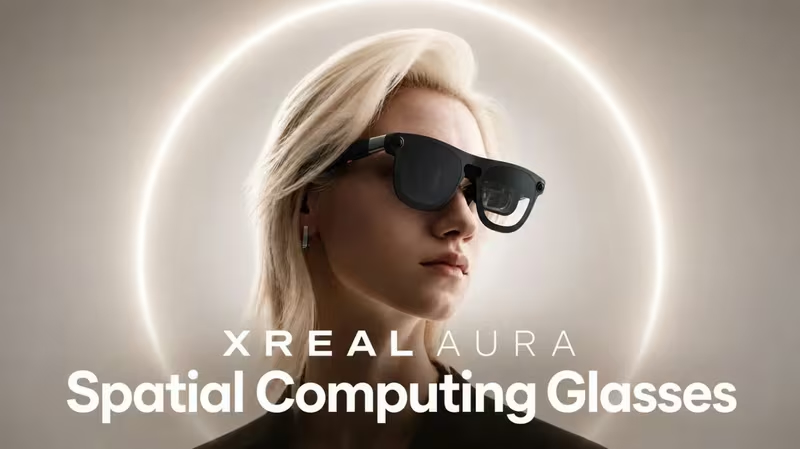
AR glasses launching this year will be the first line of products that are comfortable, powerful, socially acceptable, and within the realm of affordability. There are still many things to improve (field of view being the most obvious), but 2026 is the first year that a major tech company (Google) will be launching AR glasses to the broader public.
Technology Progress Overview
👤 Personal
19 technologiesViable for an individual or household.
| Status | Technology | Category |
|---|---|---|
| Viable | Local compute for real-time renderingComputer hardware for real-time rendering and processing. Small solutions like mobile processors are becoming more powerful (like Meta Quest 3, Apple Vision Pro). | 🖥️ Running Locally🚀 MVP |
| Solved | Inside-out spatial trackingCamera-based inside-out spatial tracking in 6 degrees — the core technology behind modern AR and VR headsets. | 🖥️ Running Locally🚀 MVP |
| Solved | 1:1 human inputSolutions for finger, foot/leg, and eye tracking are extremely developed and proven. sEMG wristbands are a new wave of products with haptic feedback. | 👋 Interaction🚀 MVP |
| Solved | 1:1 biometric inputSolutions for EEG/ECG, heart rate, breath, blood pressure, etc. | 👋 Interaction🚀 MVP |
| Solved | Spatial audioHead-locked, room-modelled positional audio — shipping across every current platform. | 🎧 Presence🚀 MVP |
| Early | Brain–computer interface (BCI)Current solutions allow for basic controls, but are inconsistent and require learning curves. The technologies for reading the human brain will develop alongside our understanding of the brain itself, so this will be a long journey. | 👋 Interaction |
| Viable | ErgonomicsDependent on display. | 🥽 Comfort |
| Viable | Ultra-high resolution micro displaysShipping, but cost-gated at the high end. | 🏞️ Photorealism🚀 MVP |
| Viable | Lensing and field of viewOptions for wide field of view currently compromise comfort. | 🏞️ Photorealism🚀 MVP |
| Viable | Varifocal displaysResolves the vergence–accommodation conflict that breaks near-field realism. Prototype-stage on shipping hardware. | 👀 Vision Realism |
| No solution | Hijacking human vision instead of a displayWriting an image directly to the visual system rather than putting a panel in front of it. | 🧠 Full Realism❌ R&D |
| Solved | Real-time rendering of hard-surface objectsRigid, non-organic geometry and materials at frame rate. | 🏞️ Photorealism🚀 MVP |
| Solved | Eye tracking for foveated renderingRender with high fidelity in a small, circular region of the display that the user is directly looking at. | 🏞️ Photorealism🚀 MVP |
| Viable | Real-time rendering of humans and organicsHigh-end and mobile computers are "good enough" to currently blow even skeptical users' minds. | 🏞️ Photorealism🚀 MVP |
| Viable | Gaussian splattingCaptured real-world scenes rendered as millions of anisotropic 3D gaussians rather than polygons. Photoreal playback at frame rate on modest hardware, and it sidesteps the modelling and lighting cost of traditional pipelines. Still weak on animation, relighting, editing, and clean integration with standard engine tooling. | 🏞️ Photorealism |
| No solution | Display brightness matching the real worldPrototypes exist, but they are far too physically large for wearable technology. We would need substantial technological breakthroughs to get this to green. | 🏞️ Photorealism❌ R&D |
| Early | Haptic feedback on human inputLong way to go on this, but the current viable alternatives are still very appealing to even skeptical users:
|
👋 Interaction🚀 MVP |
| Early | Locomotion — personal walking and runningMay be possible with new inventions that make use of existing technologies. Current alternatives are considered clunky. | 👋 Interaction🧪 R&D |
| Viable | Locomotion — in-home vehicle simulationCurrently exists for wealthy enthusiasts and DIY builders. Lower footprint affordable solutions are on the horizon. | 👋 Interaction🧪 R&D |
🏢 Enterprise
7 technologiesRelies on a corporation to reach end users — impossible or too expensive to serve by users or households.
| Status | Technology | Category |
|---|---|---|
| Solved | Enterprise rendering computeEnterprise computer for higher-end, photorealistic rendering. | 🏞️ Photorealism |
| Viable | Cloud computingCurrently runs "well" for gaming, but not low enough latency for virtual/augmented reality. | 🏞️ Photorealism |
| Solved | Data scalingCurrently allows for massive, multiplayer online games and experiences. | 🗺️ World Building🚀 MVP |
| Viable | Real-world haptic feedbackRequires a 1:1 physical world to match the virtual world (à la "The Void" VR experiences). Limits game experiences to real-world physics, or substitutes that can simulate "fantasy physics" like flying. | 👋 Interaction |
| Viable | AI for characters, interaction, and world managementGames and VR experiences are likely being developed that use existing LLMs. | 🗺️ World Building |
| Early | Locomotion — omni-directional treadmillsWalking and running via large omni-directional treadmills (Disney's patent). | 👋 Interaction |
| Solved | Locomotion — vehicle simulationSeated simulation rigs, commercially mature. | 👋 Interaction |